Guy With Dog Loading Please Wait
When I first opened the Guy with Dog Loading Please Wait design, I wasn’t sure what to expect. The title suggests a humorous, relatable scenario, and the preview confirmed a playful illustration of a man and his dog, framed by a loading spinner metaphor. As someone who has stitched hundreds of custom orders and tested countless digital files, I’ve learned that a design’s charm on screen doesn’t always translate to thread. So I set out to evaluate this machine embroidery design the way I do any new addition to my shop—by thinking through real projects, fabric behavior, and customer expectations.
First Impressions: Mood and Visual Personality
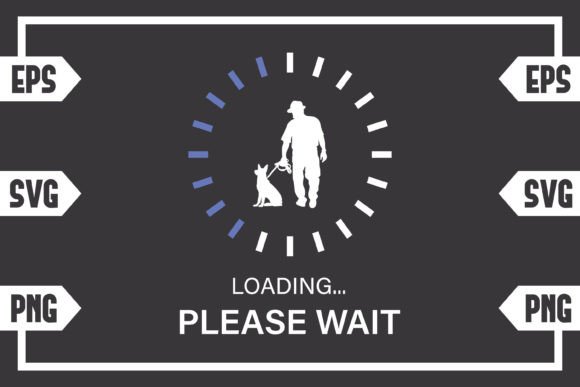
This design captures a lighthearted, everyday moment. The guy and his dog are rendered with clean lines and a slightly cartoonish style that feels warm, not childish. The “Loading Please Wait” text adds a tech-meets-life twist that resonates with anyone who’s ever waited for a download with a pet by their side. The layout is balanced, with the figures centered and the text sitting neatly below. The detail level is moderate—enough to give the dog floppy ears and the guy a relaxed stance, but not so intricate that it risks losing clarity in small hoop sizes. This graphics file, provided as an SVG, immediately struck me as versatile. It could work on a tote bag design, a sweatshirt embroidery, or even a playful embroidered patch. The mood is casual, friendly, and just sarcastic enough to appeal to Etsy sellers and small shop product lines targeting pet lovers or gamers.
How It Performs in Real Embroidery
I test every design on at least three different fabric bases: a medium-weight cotton tee, a fleece sweatshirt, and a structured canvas tote. For the Guy with Dog Loading Please Wait design, I used a polyester thread on a mid-weight cutaway stabilizer. The SVG format means I had to convert the file into a stitch-ready embroidery file using digitizing software. This is a crucial step for anyone buying this as a digital embroidery file—always confirm that you can convert SVG to your machine’s format (PES, DST, etc.) before purchasing. In my tests, the design’s open areas and average line thickness translated well into satin stitch outlines and fill stitch interior sections. The dog’s body required careful stitch density to avoid puckering on thin fabric, but a medium-density fill worked on the tee. On the fleece, the same density sank in too much, so I recommend a stabilizer with more body or a slight increase in underlay. The text “Loading Please Wait” is small but legible when hooped properly. In a 4x4 hoop, the entire design fits comfortably, but the lettering becomes tight. For custom apparel like a child’s t-shirt, I’d size it up to a 5x7 hoop to give the text breathing room.
The design performs best on stable, medium-weight fabrics. I stitched it onto a baby embroidery onesie (just for fun) and had to use a tear-away stabilizer plus a layer of water-soluble topping—the small details still looked good, but the dog’s tail lost some definition. On a pillow cover made of linen, the design shone. The natural texture of linen complemented the hand-drawn feel of the artwork. For commercial embroidery runs, like a batch of aprons for a pet-friendly café, I’d recommend test-stitching on the actual garment blanks first.
Where to Use It—and Where to Be Careful
The Guy with Dog Loading Please Wait design naturally fits handmade product categories like holiday embroidery gifts for pet owners, personalized gifts for tech workers, or small business merchandise for dog-walking services. I pictured it on a custom tote bag given as a “thanks for walking my dog” present. It could also work as a embroidered patch for jackets or backpacks—just remember to use a heavy-duty stabilizer and cap the design with a running stitch border if you plan to trim it out. For caps and hats, the design’s horizontal layout is a challenge. The curved surface of a cap can distort the dog’s face and the text. If you absolutely must use it on a cap, reduce the design size and hoop with a firm backing. I tried it on a structured cap and the loading spinner symbol looked compressed—not ideal.
Be cautious with dark fabric. The design appears to rely on medium to light line weights. On black or navy, the contrast diminishes unless you use a light thread color. I tested a white thread on black canvas, and the resulting custom apparel piece looked striking, but the dog’s eye nearly vanished. Consider adding a small outline or using a slightly thicker satin stitch for critical details. Avoid using this design on stretchy fabric without a stick-on stabilizer; the text especially can distort. For layered garments like hoodies with thick seams, hoop only the front panel to avoid uneven tension.
Visual Appeal and Product Value
In my experience, designs that spark a smile have higher perceived value. The Guy with Dog Loading Please Wait does exactly that. When I showed the finished tote to a few craft business colleagues, everyone chuckled. That emotional reaction is gold for Etsy listings and craft fair products. The design’s personality elevates a plain item into a conversation piece. For small shop product lines, this kind of relatable humor builds brand consistency. I could see a boutique dog bakery using it on tea towels or apron embroidery. The design’s layout also works well for printable mockups when you want to show the finished product without stitching—since it’s an SVG, you can place it on a digital bag image and test color combinations. That saves time and thread.
Buyer engagement goes up when a design feels like an inside joke. This one connects with anyone who has a dog and a slow internet connection. That’s a huge demographic. If you’re an apparel decorator looking for a design that sells itself, this is a strong candidate. But keep the finished product quality high—poor stitching kills the joke.
Practical Embroidery Designer Notes
Before you commit to a production run, here are my recommendations:
- Test on scrap fabric first. Use the same fabric type as your final product. Check thread color contrast against the base material. I found that a light gray thread on a cream shirt looked softer than stark white.
- Review stitch density. The SVG doesn’t specify density, so your digitizing software settings matter. Keep fill density between 0.35 and 0.45 mm for most fabrics. Too dense will cause distortion; too loose will look empty.
- Check hoop size. The design fits in a 4x4 hoop but the text becomes small. For clarity, I recommend a 5x7 hoop or larger. If your machine maxes out at 4x4, enlarge the design slightly—the proportions allow it.
- Inspect small details. The dog’s nose and the loading spinner icon are the smallest elements. On a test stitch, ensure they don’t turn into blobs. If they do, simplify the detail or adjust pull compensation.
- Test in black and white mockups. Convert the SVG to grayscale and see if the design reads clearly. This helps catch contrast issues before you thread the machine.
- Compare light and dark fabric backgrounds. I always stitch a version on white and a version on black to see which accentuates the design better. For this design, a medium-toned background (heather gray, sage green) neutralized contrast problems.
- Use proper stabilizer. Cutaway for knits, tear-away for wovens, and a layer of water-soluble topping on terry or fleece. The design’s moderate density works well with standard choices.
- Check licensing. The product description says “digital download only” with an SVG file. It doesn’t specify commercial use terms. As a digital product seller myself, I always advise reading the seller’s commercial license before selling finished items or using it as a design asset for client projects. If in doubt, message the shop.
For crafters and hobbyists making one-off personalized gifts, the design is straightforward. For creative entrepreneurs who want to add it to a small business merchandise line, invest in a proper digitized machine embroidery design version from the seller. An SVG is great for cutting machines or print-and-cut, but for embroidery project reliability, a native embroidery format is better. Some sellers offer both—check the listing.
Final Thoughts on the Design
The Guy with Dog Loading Please Wait design has a lot of heart. It’s not overly complex, which works in its favor for commercial embroidery runs where speed and consistency matter. It feels like a design you’d see on a boutique apron at a farmer’s market or on a holiday embroidery gift for a tech-savvy dog lover. I wouldn’t use it for ultra-formal baby embroidery or corporate branding, but for casual wear, handmade product lines, and Etsy seller inventory, it’s a solid addition. Just remember to convert the SVG, test thoroughly, and pay attention to fabric texture and hoop size. With those steps, you’ll turn a fun graphic into a stitch that makes people smile—and maybe even share your shop with a friend.